
Church of Scientology Spain Hosts Multi-Faith Humanitarian Event for International Day of Happiness
March 20 event in Madrid brought together 54 participants and representatives of at least four associations to present social-betterment campaigns focused on drug prevention, human rights education and ethical values.
MADRID, Spain — March 26, 2026 — Fundación para la Mejora de la Vida, la Cultura y la Sociedad (Fundacion Mejora) held a public event on March 20 at the Church of Scientology Spain in Madrid within the framework of the International Day of Happiness, bringing together people from different religious denominations, philosophical backgrounds and civic associations to learn about humanitarian campaigns aimed at addressing some of today’s most serious social problems.
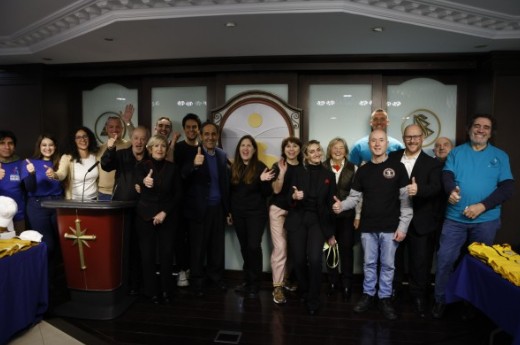
Over 50 local leaders attended the meeting, which was organized to make these initiatives known to people of all beliefs and conditions, to place educational materials at their disposal, and to encourage cooperation so that more and more people may be reached through what organizers described as a chain of help in which everyone can participate for the benefit of society.
The event also included the participation of representatives and members from at least four associations, reflecting the intention to create practical bridges among civil society groups, faith communities and individuals interested in contributing to the common good. Those present included people from different religious and philosophical traditions from varied backgrounds.
By linking the gathering to the International Day of Happiness, organizers sought to underline that social well-being cannot be separated from responsibility, dignity and solidarity. In that sense, the event presented happiness not as a superficial concept, but as something tied to healthier communities, stronger moral reference points and cooperative efforts to confront social harm.
The campaigns presented during the event are directed at some of the gravest problems affecting society today, especially those that undermine young people, families and neighbourhood life. Rather than serving as a forum for doctrinal debate, the meeting focused on practical initiatives and educational tools that can be used by people from many backgrounds who share the desire to improve conditions in society.
Among the campaigns introduced were The Truth About Drugs, Youth for Human Rights, and The Way to Happiness, each presented as a practical response to specific social needs. Together, they formed a broader picture of humanitarian action based on prevention, education and ethical conduct.
The Truth About Drugs campaign was presented as an informational tool intended to help young people and communities better understand the harmful effects of drug abuse. Its materials, including booklets and audiovisual resources, have been used internationally in schools, community groups and prevention activities with the aim of helping individuals make informed choices before addiction and its consequences take hold.
Youth for Human Rights was introduced as an educational programme based on the principles of the Universal Declaration of Human Rights. Through booklets, lesson plans and awareness materials, the initiative seeks to help children, students and communities better understand both rights and the responsibilities that accompany them. Organizers stressed that education in human rights remains essential at a time when intolerance, discrimination and social division continue to affect many societies.
Special attention was also given to The Way to Happiness, the nonreligious moral code written by Scientology founder L. Ron Hubbard. First published in 1981, the work sets out 21 precepts grounded in common-sense ethical principles, including honesty, self-respect, care for others and respect for the religious beliefs of others. Organizers noted that the text’s emphasis on peaceful coexistence and personal responsibility made it especially relevant to an event marked by multi-faith and multi-association participation.
Fundación Mejora Secretary General Isabel Ayuso-Puente explained that the purpose of presenting these campaigns together was to show that effective social betterment often begins when useful tools are shared beyond a single institution or community. In that sense, the March 20 gathering aimed not only to inform, but also to open space for cooperation among associations, believers, non-believers and citizens willing to take part in practical responses to social problems.
The inclusion of at least four associations gave the event a broader civic dimension. It demonstrated that concern for issues such as addiction, human rights awareness and ethical education is not confined to one organization or one religious tradition, but can be shared across diverse sectors of society. Monica Muñoz, Programs Director for Fundacion Mejora and Church of Scientology in Madrid said this plural participation strengthened the central idea behind the meeting: that lasting social improvement depends on collective engagement.
The theme of the International Day of Happiness provided a fitting context for that message. In a period marked across Europe by concern over social fragmentation, rising hostility in public discourse, drug-related harm and a weakening of shared ethical reference points, the Madrid event proposed a more constructive model. It suggested that happiness at a social level is linked to responsibility, education, mutual respect and the willingness to help others.
Participants were therefore invited to see the campaigns not merely as informational programmes, but as resources that can help create better conditions in everyday life. Whether through drug prevention efforts, human rights education or the promotion of moral values, the event’s message was that happier communities are built when people work together to reduce harm and strengthen trust.
This emphasis on collaboration is consistent with Fundación Mejora’s broader work in the fields of education, culture and social improvement. By creating opportunities for dialogue and cooperation, the foundation has sought to make constructive materials available to a wider public and to encourage a more participatory form of civic responsibility.
Ivan Arjona, representative of the Church of Scientology to the European Union, the OSCE, the Council of Europe and the United Nations, said the Madrid event illustrated the importance of linking humanitarian action with shared values.
“The International Day of Happiness is a meaningful occasion to remember that real happiness in society is connected to dignity, mutual respect and the willingness to help others,” Arjona said. “When people from different beliefs, backgrounds and associations come together to address problems such as drugs, human rights ignorance and moral decline, they are contributing in a practical way to a healthier and more stable society.”
He added that cooperation among associations and communities is particularly important in the European context. “Europe’s strength has long rested on the idea that people with different convictions can still work together for the common good,” Arjona said. “Initiatives like this one show that humanitarian tools can unite rather than divide, and that civic responsibility becomes stronger when more people are invited to take part.”
That was one of the clearest outcomes of the March 20 event. By convening people from different religious and philosophical traditions, alongside at least four associations, “the gathering showed that it is possible to move beyond difference and focus on practical solutions to shared concerns”. That, they said, is the beginning of the chain of help they hope to expand: one in which awareness leads to participation, participation leads to service, and service contributes to the well-being of society as a whole.
The event at the Church of Scientology Spain was thus presented as both a local observance of the International Day of Happiness and a broader expression of civic collaboration. By placing humanitarian campaigns in the hands of a diverse audience, Fundación Mejora sought to reinforce the idea that social happiness is not built by rhetoric alone, but by education, prevention, ethical action and cooperation among people willing to contribute.
Media Contact
Organization: European Office Church of Scientology for Public Affairs and Human Rights
Contact Person: Ivan Arjona
Website: https://www.scientologyeurope.org
Email: Send Email
Address:Boulevard de Waterloo 103
City: Brussels
State: Brussels
Country:Belgium
Release id:43083
The post Church of Scientology Spain Hosts Multi-Faith Humanitarian Event for International Day of Happiness appeared first on King Newswire. This content is provided by a third-party source.. King Newswire makes no warranties or representations in connection with it. King Newswire is a press release distribution agency and does not endorse or verify the claims made in this release. If you have any complaints or copyright concerns related to this article, please contact the company listed in the ‘Media Contact’ section
Disclaimer: The views, suggestions, and opinions expressed here are the sole responsibility of the experts. No STOCKS MONO journalist was involved in the writing and production of this article.